




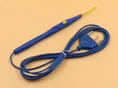

In the realm of modern surgical procedures, endoscopic surgery has emerged as a revolutionary approach, offering numerous benefits such as reduced patient trauma, shorter recovery times, and minimized scarring. At the same time, bipolar forceps have become indispensable tools in surgical settings, particularly for their ability to control bleeding and perform delicate tissue manipulations. A question that often arises among surgeons, medical device professionals, and procurement officers is whether a cable for bipolar forceps can be used in endoscopic surgery. As a supplier of Bipolar Forceps Cable Cord, I am well - placed to explore this topic in depth.
Understanding Bipolar Forceps and Their Cables
Bipolar forceps are surgical instruments that deliver electrical current between two tips. This current generates heat, which can be used to coagulate blood vessels, cut tissue, or perform other surgical tasks. The cable for bipolar forceps serves as the conduit for this electrical energy, connecting the forceps to the power source. These cables are designed to be flexible, durable, and capable of transmitting the required electrical signals safely and efficiently.
The construction of a bipolar forceps cable is a complex process. It typically consists of multiple layers of insulation to prevent electrical leakage and ensure patient safety. The inner conductor is usually made of high - quality copper or other conductive materials to minimize resistance and maximize the transfer of electrical energy. The outer sheath is designed to be smooth and resistant to abrasion, chemicals, and sterilization processes, which are crucial for maintaining the integrity of the cable during repeated use.
Endoscopic Surgery: Requirements and Challenges
Endoscopic surgery involves the use of a thin, flexible tube with a light and camera attached (endoscope) to visualize and operate inside the body through small incisions. This minimally invasive approach requires specialized instruments that can fit through the small working channels of the endoscope. These instruments must be not only small and flexible but also capable of performing the same functions as traditional surgical tools.

One of the main challenges in endoscopic surgery is the limited space within the working channels. Cables and instruments need to be designed to be as thin as possible without sacrificing functionality. Additionally, the cables must be able to withstand the bending and twisting forces that occur during the insertion and manipulation of the endoscope. Another important consideration is the need for sterility. All instruments and cables used in endoscopic surgery must be able to undergo rigorous sterilization processes without losing their performance characteristics.
Compatibility of Bipolar Forceps Cables with Endoscopic Surgery
The answer to whether a cable for bipolar forceps can be used in endoscopic surgery is yes, but with certain conditions. There are bipolar forceps cables specifically designed for endoscopic applications. These cables are engineered to meet the unique requirements of endoscopic surgery.
Firstly, they are much thinner than standard bipolar forceps cables. This allows them to pass through the narrow working channels of the endoscope without causing blockages or interfering with the movement of other instruments. For example, some endoscopic bipolar forceps cables have an outer diameter of less than 2 mm, which is significantly smaller than traditional cables.
Secondly, these cables are highly flexible. They can bend and twist easily to follow the path of the endoscope inside the body. This flexibility is achieved through the use of special materials and construction techniques. For instance, the inner conductors may be made of fine - stranded wires, and the outer sheath may be made of a soft, pliable polymer.
Thirdly, endoscopic bipolar forceps cables are designed to be compatible with the sterilization methods used in endoscopic surgery. They can withstand high - temperature steam sterilization, chemical sterilization, or other advanced sterilization techniques without degradation. This ensures that the cables remain safe and effective for repeated use.
Advantages of Using Bipolar Forceps in Endoscopic Surgery
When a suitable cable for bipolar forceps is used in endoscopic surgery, it offers several advantages. One of the most significant benefits is the ability to control bleeding. In endoscopic procedures, where direct access to the surgical site is limited, it can be challenging to stop bleeding using traditional methods. Bipolar forceps can quickly and effectively coagulate blood vessels, reducing the risk of excessive blood loss and improving the visibility of the surgical field.
Another advantage is the precision of tissue manipulation. Bipolar forceps allow surgeons to perform delicate tasks such as dissecting tissue, removing polyps, or performing biopsies with a high degree of accuracy. The controlled application of electrical energy minimizes damage to surrounding healthy tissue, which is crucial in endoscopic surgery, where the margin for error is small.
Considerations for Procurement
If you are in the market for bipolar forceps cables for endoscopic surgery, there are several factors to consider. Quality is of utmost importance. Look for cables that are manufactured by reputable companies with a proven track record in the medical device industry. The cables should comply with international standards and regulations, such as ISO 13485 for medical device quality management systems.
Cost is also a consideration, but it should not be the only factor. While it may be tempting to choose the cheapest option, low - quality cables may not perform well or may have a shorter lifespan, which can ultimately lead to higher costs in the long run. Consider the total cost of ownership, including the price of the cable, its durability, and the frequency of replacement.
Compatibility with existing equipment is another crucial factor. Make sure that the bipolar forceps cables you choose are compatible with your endoscopes and power sources. This will ensure seamless integration and optimal performance during surgical procedures.
Conclusion
In conclusion, a cable for bipolar forceps can indeed be used in endoscopic surgery, provided that it is specifically designed to meet the unique requirements of this minimally invasive approach. These specialized cables offer significant advantages in terms of bleeding control and tissue manipulation, enhancing the safety and effectiveness of endoscopic procedures.
As a supplier of Bipolar Forceps Cable Cord, we are committed to providing high - quality, reliable cables that are suitable for endoscopic surgery. If you are interested in learning more about our products or would like to discuss your procurement needs, please feel free to reach out to us. We look forward to the opportunity to work with you and contribute to the success of your surgical procedures.
References
- Smith, J. (2018). "Advances in Endoscopic Surgical Instruments." Journal of Minimally Invasive Surgery, 25(3), 123 - 132.
- Johnson, A. (2019). "The Role of Bipolar Forceps in Modern Surgery." Surgical Innovations, 16(2), 98 - 105.
- Brown, C. (2020). "Quality Considerations in the Procurement of Medical Cables." Medical Device Technology, 31(4), 45 - 52.